
SEO for plumbers: a practical guide to winning local jobs from Google
SEO for plumbers in plain English: set up your Google Business Profile, build a page for each job and show only the Gas Safe or WaterSafe status you hold.
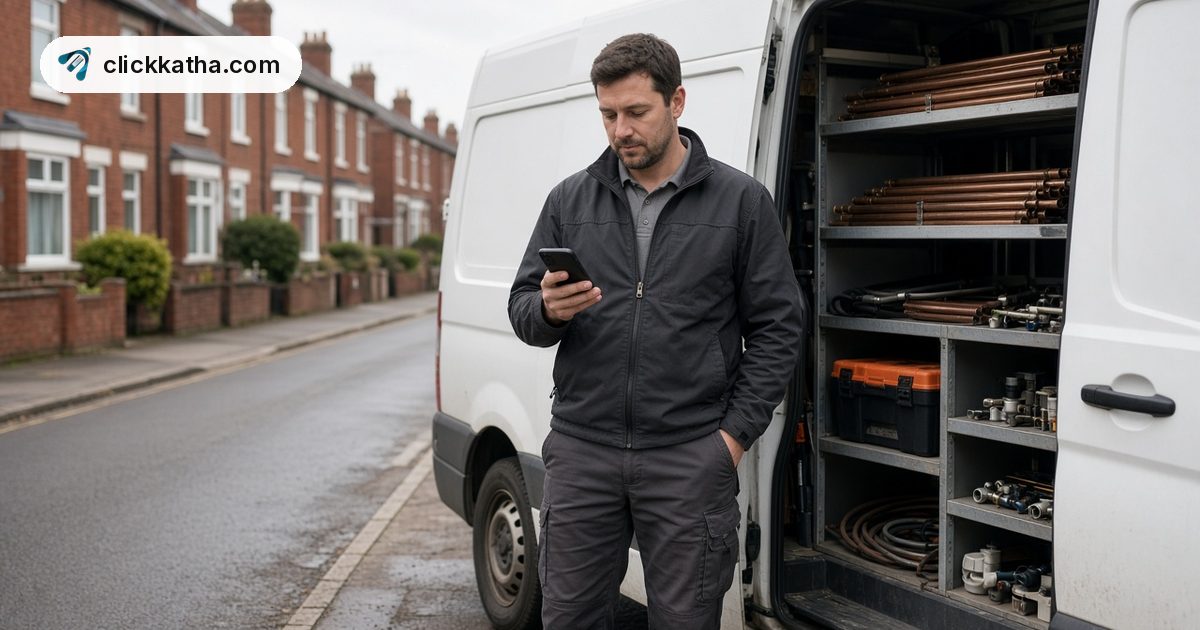
SEO for plumbers is the work that gets your business found when someone nearby searches Google for a plumber, on the map and in the ordinary results. For most plumbers it comes down to three things: a Google Business Profile set up for the areas you really cover, a page on your website for each job you want more of, and proof that you're qualified and trusted. The rules below come from Google's own help pages and HSE's and WaterSafe's own wording.
What does SEO for plumbers actually involve?
SEO for plumbers involves a profile, pages and proof. The profile is your Google Business Profile, the listing that appears on Google Maps and in the local results. The pages are the ones on your own website that explain each job you do. The proof is what lets a stranger trust you with their boiler: the registrations you hold, your reviews and photos of your work.
There's no shortcut. Google says: "There's no way to request or pay for a better local ranking on Google." (Business Profile Help) So the work is about being the clearest, most trustworthy match for the search.
Two kinds of plumbing search: the burst pipe and the new bathroom
A burst pipe and a new bathroom are two different searches, won in two different places. The emergency call is won on your Google Business Profile. The planned job is won on a page about that job.
Someone with water coming through the ceiling wants a plumber who is open now and close by, and tends to ring straight from the map listing. Someone planning a new bathroom or a repipe has time. They compare a few firms, read about the job and look for proof.
By search (our working judgement, not data):
emergency plumber near me: they want to see you're open, nearby and answering. Won on: your Google Business Profile.
blocked drain plus their town: they want a quick fix from someone who covers their street. Won on: mostly the profile, backed by a drains page.
bathroom fitter plus their town: they want photos, what the job involves and reviews from similar jobs. Won on: a bathroom installation page.
boiler service: they want proof of Gas Safe registration and your areas. Won on: both the profile and a gas page.
Set up your Google Business Profile for the way a plumber works
Local SEO for plumbers starts with the profile, because that's where the emergency search is won. The full set-up is in our Google Business Profile optimisation checklist.
Working from home? Hide the address
Google uses a plumber as its own example: "For example, if you’re a plumber and run your business from your residential address, clear the address from your Business Profile." (Business Profile guidelines) You set service areas instead. Our checklist covers Google's address and service-area rules in full.
Draw the service area you'll really drive to
Google's advice: "When you set your service area, be as specific and accurate as possible." (Business Profile Help) Its guidelines also set an outer limit: "The boundaries of your profile’s overall service area shouldn’t extend farther than about two hours of driving time from where your business is based."
Treat that as a ceiling, not a target. Google also says "Distance refers to how far each business is from the customer who’s searching." So in towns at the edge of your area, your website and reviews have to work harder. Only include places you'd happily drive to on a wet Tuesday evening.
Only advertise the hours you answer the phone
Google asks you to "Provide your regular customer-facing hours of operation." If you take emergency call-outs, show the hours when someone will actually pick up, and don't claim round-the-clock cover unless it's true. Google adds: "It's a good idea to confirm your hours for official holidays, even if they’re the same as your regular hours." (special hours help)
Keep the business name as it is
It's tempting to add emergency plumber and your town to the profile name. Google's guidelines say: "Including unnecessary information in your business name isn't permitted, and could result in the suspension of your Business Profile."
Build a page for each job you want more of
Whether you're a sole trader or one of the bigger plumbing companies, a plumbing website needs one page for each service you want more of. Typical pages are leak and emergency repairs, bathroom installation, blocked drains, and boiler and gas work, but only if you're on the Gas Safe Register.
Each page should cover:
what the job involves, in plain words
photos of your own jobs, not stock images
the areas you cover for that work
the accreditations that apply to it
reviews from customers who had that kind of job
a phone number at the top and a short enquiry form
Keep your name, address and phone number the same on the site as on the profile. Step 7 of the full local SEO checklist covers those on-page signals.
Town pages that help, and the kind Google treats as spam
A town page is worth having only if it says something true and useful about that town. Google's spam policies name the problem: "Doorway abuse is when sites or pages are created to rank for specific, similar search queries." (spam policies) Google's examples include sets of pages aimed at particular towns that all funnel people to one page, and blocks of text listing the places a page is trying to rank for.
So a page that only swaps the town name, or a footer packed with place names, is what the policy describes. A useful town page might say which parts of the town you cover, the jobs you've done there, or local details you genuinely know. If you can't write that, don't build the page.
Show the accreditations you actually hold: Gas Safe and WaterSafe
Gas Safe
HSE, the regulator, is plain about it: "Under the Gas Safety (Installation and Use) Regulations 1998 for a gas engineering business to legally undertake gas work that is within the scope of the Regulations they must be on the Gas Safe Register." (HSE) It also says: "The gas engineer's competencies are clearly marked on the back of the engineer's Gas Safe Register ID card." (HSE gas FAQs)
If you do gas work, show your Gas Safe registration on your gas pages and in your profile description, and describe only the categories on your card. If you're not registered, don't advertise boiler or gas work at all.
WaterSafe
WaterSafe is a national accreditation body and free online directory for qualified plumbers (WaterSafe Register). Approved plumbers can, in its words, "issue ‘Certificates of Compliance’, offering extra protection for homeowners."
If you're WaterSafe approved, say so on your pages and profile. If you aren't, leave it out.
Reviews and job photos that win the next call
Ask for a review at the end of every job, the same way for every customer, using your Google review link. Reply in your own words. Google says "When you reply to customer reviews, it shows that you value their feedback." The rules on incentives and review gating are in our guide to asking for reviews without breaking Google's rules.
Use your own photos: your van, your team and finished jobs. Stock photos tell a customer nothing about you.
What you can do yourself, and when to get help
Google says: "If you run a small local business, you can probably do much of the work yourself." (Do you need an SEO?) A sensible order:
Fix your Google Business Profile: address, service area, hours and name.
Build one job page for the work you want more of.
Make asking for reviews part of finishing each job.
Check Search Console to see which searches show your site. Step 9 of the local SEO checklist covers it.
Help makes sense when you've no time, can't edit your site, or cover several services and areas. Before you pay anyone, remember Google's line: "No one can guarantee a #1 ranking on Google." Our SEO cost guide, linked in the FAQs, lists red flags to check first.
FAQs
How much should I expect to pay for SEO?
No independent body publishes official SEO prices in the UK. The right figure for you depends on how much work your site needs, how competitive your market is and who does the work. Our guide to how much SEO costs for a small business in the UK sets out the named sources and the red flags to check before you sign.
How much does it cost to pay someone for SEO?
You can't pay Google to rank higher in the free local results. What you pay for is someone's time on your profile and website. Our cost guide's advice is to "Treat any single figure as a starting point for questions, not a price list." It also notes: "We couldn't find a UK source that publishes a separate local SEO price with a clear method."
Is SEO being phased out?
No, people still search Google for plumbers, and the profile and pages above are what Google shows them. Our post on whether SEO still matters now AI answers exist covers the AI question.
Should a plumber show their home address on Google?
No. Google's own guidelines use a plumber as the example: if you run your business from your home address, clear the address from your Business Profile and set service areas instead. Keep those areas to places you really serve. Our Google Business Profile checklist has the details.
Do I need a website if I have a Google Business Profile?
The profile can win an emergency call on its own, because the customer often rings straight from the listing. Planned jobs are different: people want to read about the work, see photos and check your accreditations before they ring. That needs pages on your own website. So if you want more bathrooms, boiler work or repiping, yes, you need a website.
How long does SEO take for a plumber?
Google doesn't give a timeline. Its starter guide says: "In general, you likely want to wait a few weeks to assess whether your work had beneficial effects in Google Search results." (SEO Starter Guide) Be wary of anyone who promises a date, a position or a number of calls.
Next step
If you'd rather someone set this up for your plumbing business, see our local SEO service. If you're doing it yourself, start with the profile, then add one job page.